LionLift / Escalator care
Plan the service your escalators need, from routine maintenance to fault investigation and component repairs. LionLift helps building owners and facilities teams define the work around their equipment and daily operations.
Planned servicing · Fault diagnosis · Repair proposals

01 / Care that starts with your site
A busy retail entrance and a quieter office building have different service priorities. Start with the escalator's condition, the demands of the site and the coverage you expect, then agree a practical maintenance and repair plan.
Scheduled escalator servicing based on the equipment's instructions and operating conditions, with attention to wear, cleaning, lubrication and appropriate adjustments.
Review the reported problem and service history before deciding what work is needed. A recurring stoppage needs an explanation that goes beyond the latest symptom.
Define the proposed repair, component requirements, access arrangements and approvals. Confirm contract coverage and any separate quotation before work begins.
02 / What gets attention
The maintenance checklist should match the make, model and systems fitted to your escalator. These key areas help frame the service discussion; work and testing follow the manufacturer's instructions and agreed scope.
Condition of the step assembly, step chains and rollers, with attention to wear and reported changes in movement.
Handrail condition, guides, entry areas and drive components. Report visible damage or a change in handrail operation for assessment.
Comb teeth, landing plates and the condition of passenger access areas, including damage or defects needing attention.
The main drive, relevant transmission components and braking arrangements, assessed and serviced for the particular installation.
Applicable control functions and protective devices, including stop functions, with specialist checks appropriate to the fitted systems.
Appropriate servicing of designated components and a record of findings, completed work and any further repairs requiring approval.
Routine service visits do not automatically cover every repair or separately required inspection. Confirm these arrangements for your equipment and location.
03 / When something needs fixing
For an unexpected stop, unusual operation or visible component damage, share a clear fault description with LionLift. The next step is to establish the condition of the equipment and define an appropriate repair proposal.
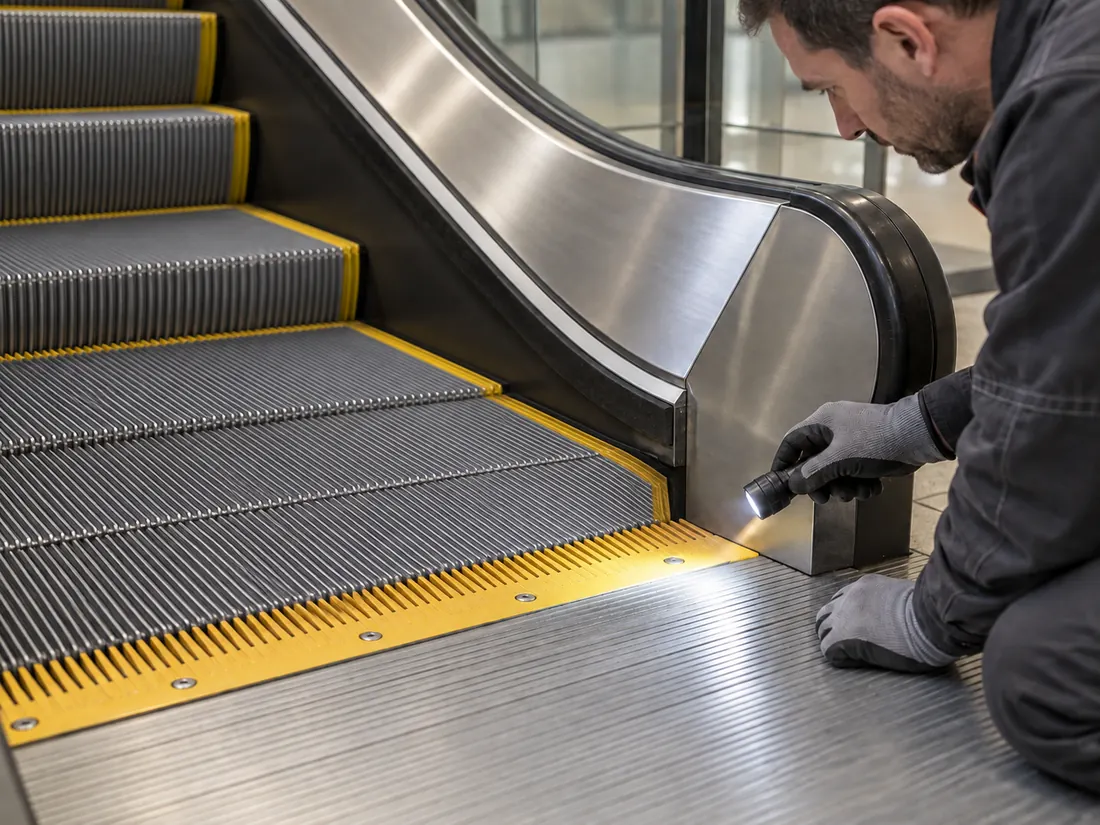
04 / Make a useful fault report
Tell your service contact about new noise, vibration, repeated stops, error indications or visible damage to the handrail, steps or comb teeth. These observations help frame an investigation; they do not establish a diagnosis on their own.
Include the unit identification, time, direction of travel and what was noticed. Mention recent service work and whether other units were affected. A photo of a visible issue can be useful if it can be taken from a safe public position.
Identify the person who can arrange access and receive updates. Explain how a stopped unit affects circulation, trading or accessibility so the service discussion reflects your building's priorities.
05 / Work around your operation
Visit frequency should reflect manufacturer guidance, operating hours, usage, environment and equipment condition. Ask why the proposed schedule is suitable, and review it when the site or fault pattern changes.
Share opening hours, peak periods and the role of each unit. In shopping centres, hotels and public-facing commercial buildings, planned work needs to account for the routes people use when an escalator is unavailable.
Include environmental conditions that may affect the equipment, such as exposure to dust or weather. An indoor installation and an exposed unit should not be assessed from the same assumptions.
Discuss access to the installation, barriers, delivery arrangements and any restrictions on work during occupied hours. Confirm whether work outside normal service hours is available and how it is charged.
For several escalators, agree whether work can be coordinated in stages. The plan should also identify who communicates closures and approves changes to the schedule.
06 / Put the scope in writing
A clear agreement helps you compare proposals and manage future repairs. Check the inclusions, exclusions and response arrangements rather than relying on a package name.
07 / A quote you can assess
The equipment and the agreed coverage matter more than a headline price. Ask for the maintenance scope and any repair work to be described clearly.
Provide the number of units, manufacturer, model if known, age, building location and operating hours. Add your preferred coverage and any service records. Visit arrangements and the extent of parts and breakdown cover help define a comparable proposal.
The fault assessment, component availability, access and work required affect the quotation and anticipated timing. Confirm whether investigation is chargeable, which parts are proposed and whether work is covered by an existing agreement.
If repeated repairs or obsolete components make planning difficult, ask whether targeted modernisation should be assessed alongside continued servicing.
08 / The next step
Tell us where the escalators are, what equipment is installed and whether you need ongoing maintenance or help with a current fault.
Discuss available records, access and whether a site assessment is needed before a scope or quotation can be confirmed.
Review the proposed coverage, repair requirements, timing and responsibilities before authorising the service.
09 / Common questions
Practical answers for property owners and facilities teams arranging maintenance or comparing repair proposals.
Maintenance is scheduled care of the installation. Repair addresses a fault or damaged component. The two may sit within one agreement, but repair labour, parts and breakdown attendance are not automatically included in every maintenance contract.
The schedule should be based on the manufacturer's instructions, usage, operating environment and condition. There is no single maintenance interval suitable for every unit. Discuss the proposed frequency and review it if the site demand or fault history changes.
A repair assessment may involve steps and rollers, chains, handrail equipment, comb plates, drive assemblies or control components. The correct repair depends on the diagnosis and equipment specification; availability and compatibility need to be confirmed.
Send the make, model and available service documentation. LionLift needs to review the installation, technical information and component availability before confirming service coverage for that particular unit.
Coverage depends on your agreement and site location. Confirm the available hours, contact route, attendance terms and extra charges before relying on a service arrangement. A standard maintenance visit schedule does not itself establish emergency coverage.
Timing depends on the fault, investigation required, parts availability and site access. Ask for an anticipated schedule after assessment and for updates if further findings change the scope. A minor adjustment and a major component replacement require different planning.
Do not assume it does. Maintenance, inspection and any separately required examination need to be arranged under the requirements applying to your location and equipment. Confirm who is responsible and which activities the contract includes.
Provide the site address, number of escalators, manufacturer and model if known, operating hours and service records. For a fault, add the unit identification, when it occurred, what was observed and any available fault indication.
LionLift / Start with your equipment
Send your building and equipment details, whether you need a maintenance agreement or a repair assessment. We'll discuss the next steps and the service scope available for your site.